
5–6 June 2025
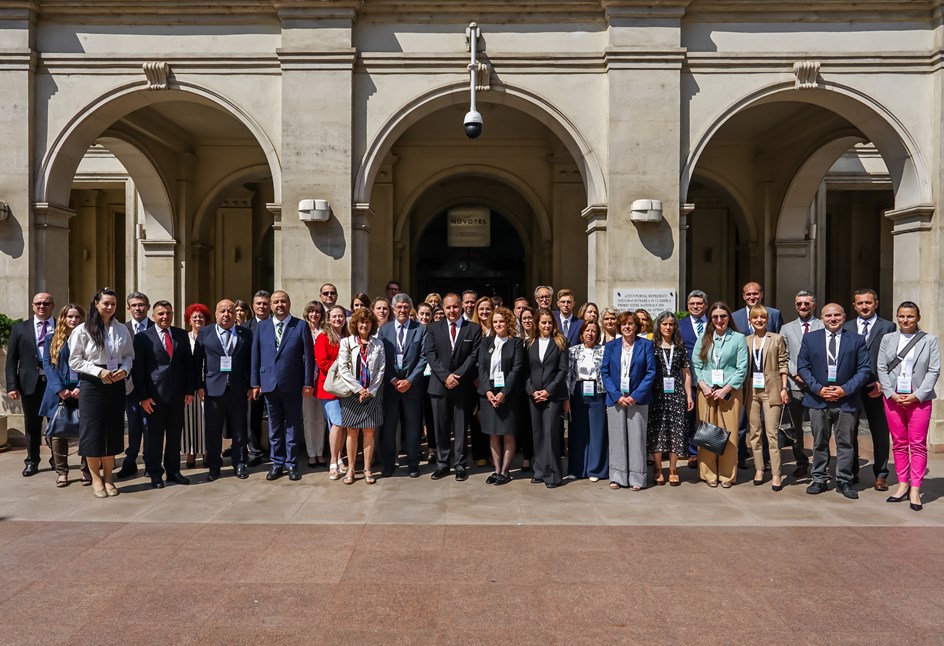
On 5–6 June 2025, the 3rd meeting of the EUROSAI Project Group under Strategic Goal No. 1, focusing on Real-Time Auditing, was held in Bucharest, Romania. Chaired by the SAI of Italy the meeting aimed to foster the exchange of knowledge, experience and good practices among the Supreme Audit Institutions of the EUROSAI community in the field of real-time auditing.
During the two-day meeting, participants discussed and approved the document entitled the “Non-Paper”. Although not a formally binding or official document, it serves as a set of common principles and characteristics to be considered when conducting real-time audits. The document is the outcome of the Project Group’s discussions initiated in the previous year, in which ALSAI has been an active participant.
The need for real-time auditing has emerged in response to the growing expectations placed on Supreme Audit Institutions by their respective Parliaments, the public, and other stakeholders to address current and emerging issues in a timely manner. In his opening remarks, the President of the Romanian Court of Accounts emphasized that public interest today is no longer focused on budget execution or procurement irregularities that occurred years ago. Instead, both the public and Parliament expect to know how taxpayers’ money is being used in real time, what measures SAIs are taking to prevent its misuse, and whether governments are responding effectively and efficiently to emergency situations.
During the third meeting, participants discussed the benefits and methodologies for implementing real-time auditing, drawing on the experiences of countries that have already applied this audit approach, including the United Kingdom, Romania and Serbia. At the same time, representatives from many SAIs that have not yet adopted real-time auditing raised questions, shared comments, and discussed the challenges associated with its implementation.
Real-time audits can be carried out during the design and implementation of programs and projects, as well as throughout public procurement procedures. By conducting audits while activities are still underway, SAIs are able to provide timely recommendations that support improvements before deficiencies become entrenched.
Several SAIs also presented their practical experiences with real-time auditing, including those of Croatia, Portugal, and Serbia. Although these audits addressed different topics and applied varying methodological approaches, they shared several common characteristics: short audit timeframes, concise and focused reports, extensive use of visual information such as charts, graphs, and statistics and the preparation of interim or partial reports, depending on the level of risk associated with the audited matter.
At the conclusion of the two-day meeting, participants approved the document on the Methodology and Benefits of Real-Time Auditing, which focuses on the following key principles:
Benefits of Real-Time Auditing
Timely Information
Real-time audits provide information on ongoing activities and events, enabling the early identification of issues and potential risks while they are still unfolding.
Enhanced Risk Management
By monitoring operations as they occur, real-time audits help identify and address risks before they escalate, allowing corrective actions to be taken at an early stage.
Improved Governance
Real-time auditing strengthens accountability and transparency by providing continuous oversight and assessment of public sector activities, thereby supporting more effective governance.
Preventive Approach
Rather than focusing primarily on correcting deficiencies after they have occurred, real-time audits emphasize the prevention of problems through timely observations and recommendations.
Key Principles for Conducting Real-Time Audits
Respect for the Rights of the Audited Entity – Ensuring that the rights of the audited entity are fully respected and that the audit process is conducted in a fair, impartial, and transparent manner.
Quality Assurance – Applying appropriate quality assurance procedures to ensure that the audit maintains its quality, accuracy, and completeness, even when conducted under tight time constraints.
Regular Communication – Maintaining open and continuous communication with the audited entity throughout the audit process to promote transparency, cooperation, and the timely exchange of information.