
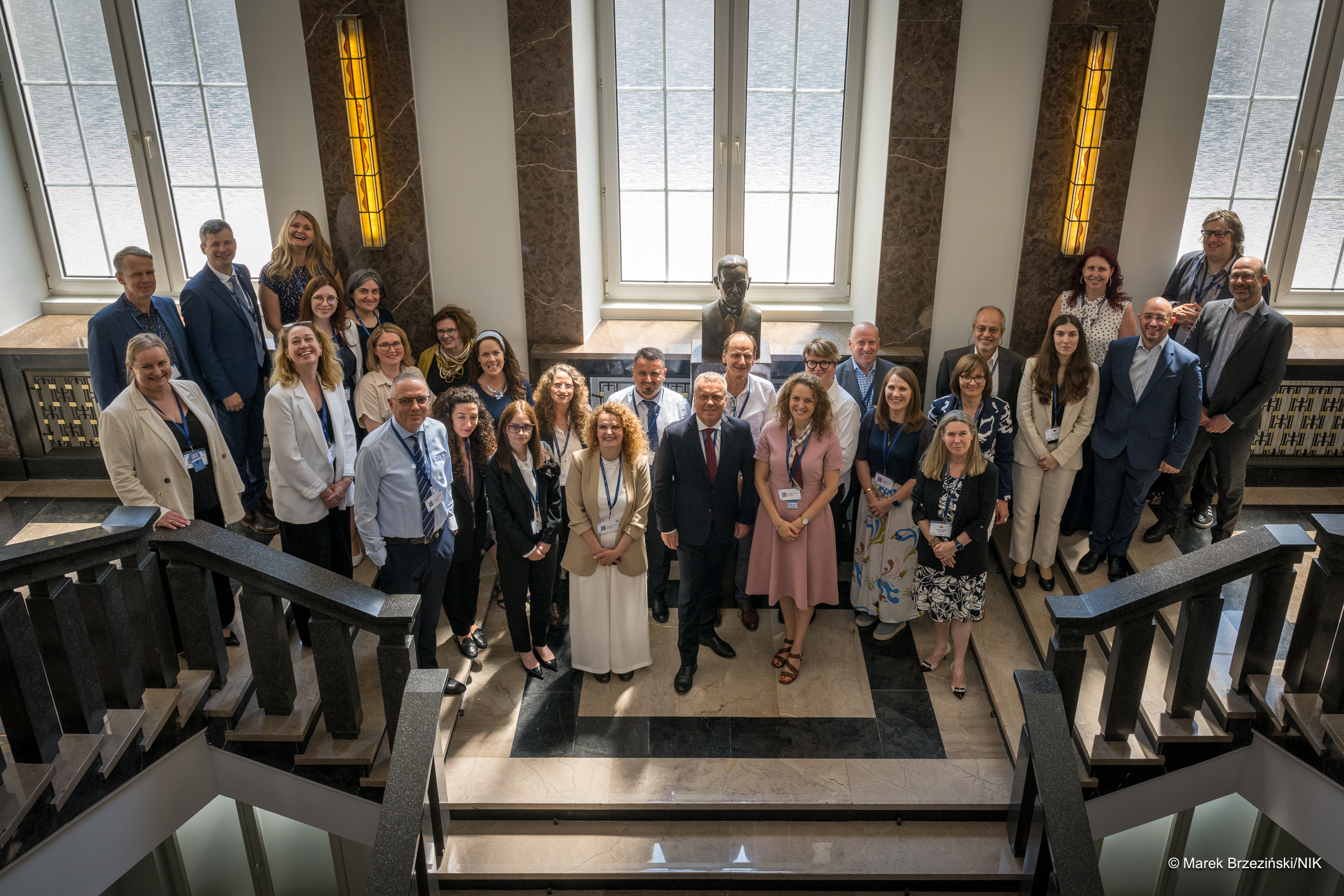
On June 29-30, 2026 it was held in Warsaw the thematic workshop on “Peer Review” practices, bringing together representatives of Supreme Audit Institutions (SAIs) from Albania, Kosovo, Poland, Slovakia, Israel, Bulgaria, France, Sweden, Austria, Hungary, Portugal, the United Kingdom, Malta, and Latvia.
The purpose of this workshop was to present and further develop the concept of “Peer Review”, which represents an external, independent, and professional review process of one or more aspects of the organization and functioning of a Supreme Audit Institution. This review is carried out by a team of professional peers from one or more SAIs, in accordance with INTOSAI standards. Participation in a Peer Review process, both as the institution subject to review, and as the institution conducting the review, is based on the principle of voluntariness.
During the meeting, participants discussed the main areas in which a Supreme Audit Institution may request a Peer Review to be conducted by peer institutions. The discussions focused on assessing the extent of compliance with international and national auditing standards, the functioning of internal systems, identifying opportunities to enhance the efficiency and effectiveness of institutional activities, improving audit approaches, methodologies, and tools, as well as increasing audit productivity and quality.
The main stages of the Peer Review process were subsequently discussed, starting with the collection and analysis of documentation and data from the institution undergoing the review, the analysis of specific cases, and the assessments carried out by the review team, through to continuous communication between the parties throughout the entire process.
During the workshop, through thematic presentations, interactive discussions, and the exchange of experiences among participants, experts with extensive international knowledge and experience presented best practices in the implementation of the Peer Review process, while also sharing the most common challenges encountered during its planning, organization, and implementation.
In addition, practical examples from Supreme Audit Institutions were presented, illustrating how the process is organized, the methodologies applied, the factors contributing to its success, as well as the impact of Peer Review recommendations on improving audit quality, strengthening institutional capacities and enhancing the performance of the participating institutions.
Particular attention was paid to the implementation phase of the recommendations arising from the Peer Review process, emphasizing that the value of this process not only lies in identifying issues and formulating recommendations, but also in their effective implementation through a well-structured action plan.
In this context, the importance of defining specific measures, implementation deadlines, institutional responsibilities, and monitoring mechanisms was highlighted, with a view to ensuring effective follow-up of the recommendations and achieving sustainable improvements in the institution’s performance and functioning.
ALSAI was represented at this event by Ms Joniada Goçaj, Department Director and Ms Eriklida Shpori, Senior Auditor.